Built at the Threshold of War
You're standing in front of a 1941 Transitional Ranch home, red brick glowing in the Arizona sun. That year matters: 1941 was the year before Pearl Harbor — before America entered the war and residential construction nearly stopped. This house was built in the final wave of pre-war expansion, right at the moment everything changed.
It was designed by Orville A. Bell, a prominent Phoenix architect who also redesigned the Arizona State Capitol. The home belongs to one of Arizona's largest intact collections of Transitional Ranch architecture. The Federal Housing Authority made it possible — insuring mortgages and believing in something radical for its time: that ordinary working people should own homes.
The Style That Changed America
Ranch architecture is jazz and a great cheeseburger — an art form unique to America. No ornate period revivals, no fussy details. Clean lines. Open living. A deliberate connection between inside and out, suited to the desert.
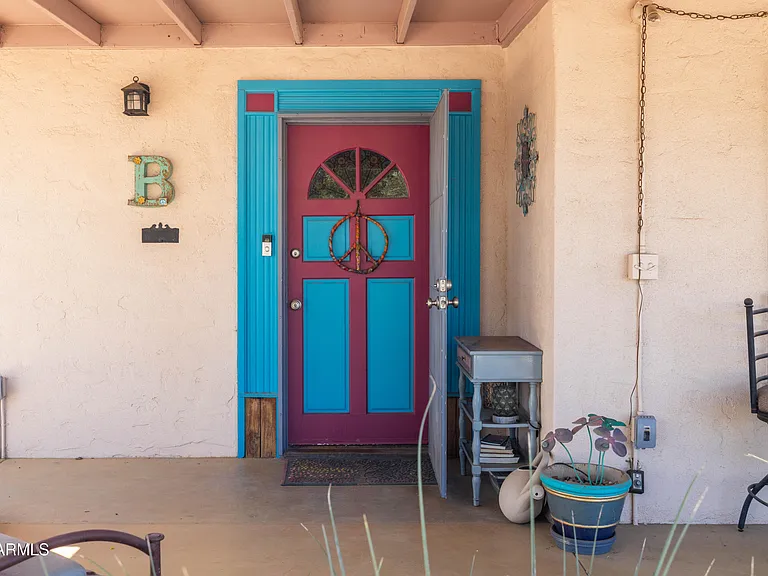
These 910 square feet embody that modernist turn: simple, functional, efficient. Low-pitched roof, steel-frame windows, brick exterior. Many homes of this era still wear their original two-color schemes — peach and black, pink and black, powder blue and black. Colors you just don't see anymore.
Kristy and Joe: Finding Their People
Kristy was taking walks through Coronado for work when something shifted. The neighborhood captivated her — historic homes, character, the unmistakable soul of a place where people actually lived and created and belonged. She fell in love with the streets before she fell in love with a house.
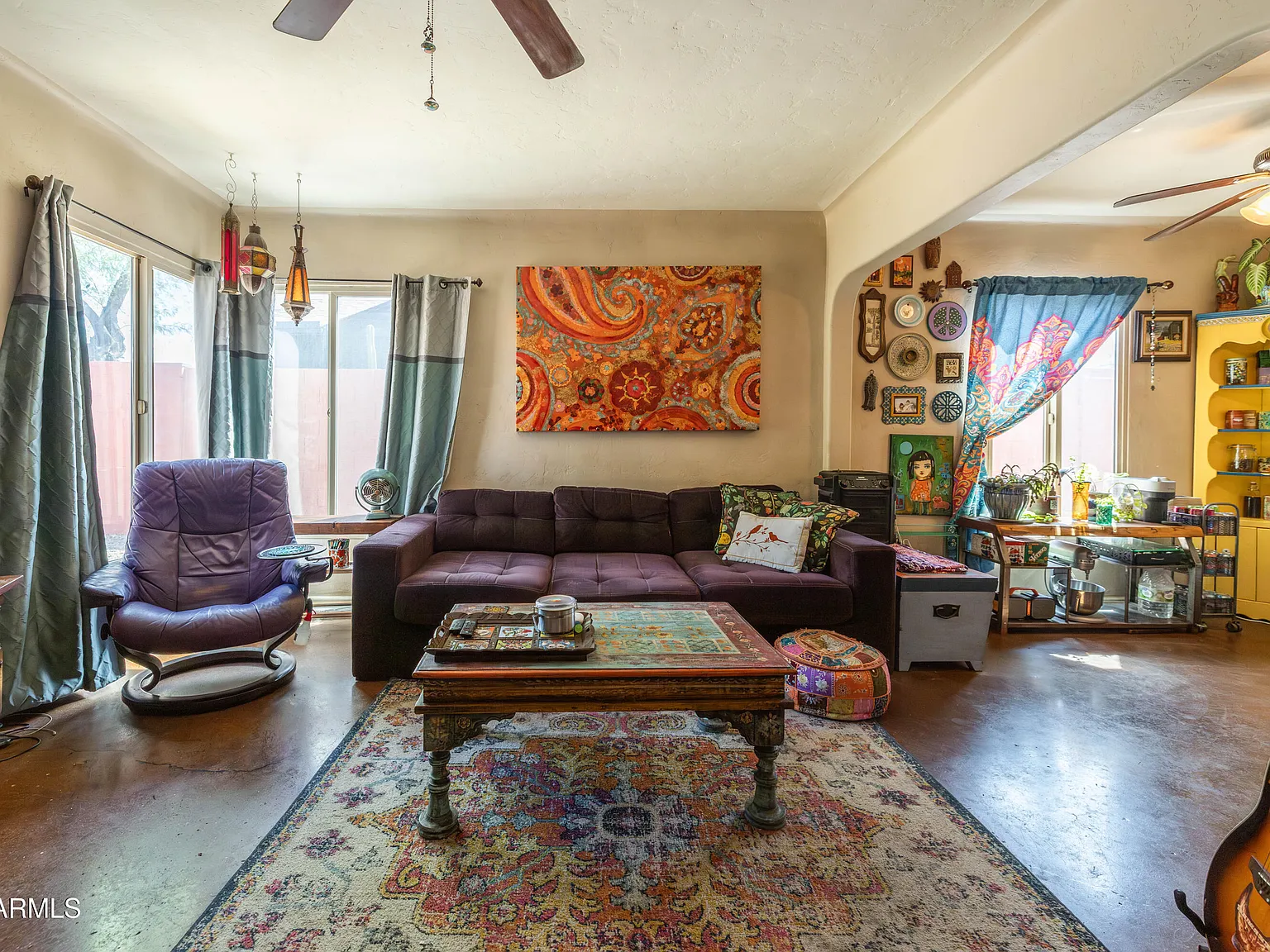
When she and Joe found this 1941 home with its lovely concrete floors and blank-canvas backyard, it felt like the universe had been listening. Before Coronado, they'd lived in the East Valley, where the houses were copies of copies and neighbors kept their distance. Moving here felt like winning the lottery.
Finding this house, with its concrete floors and blank-canvas backyard, was like a creative shot in the arm.
The Kitchen, Where Everything Happened
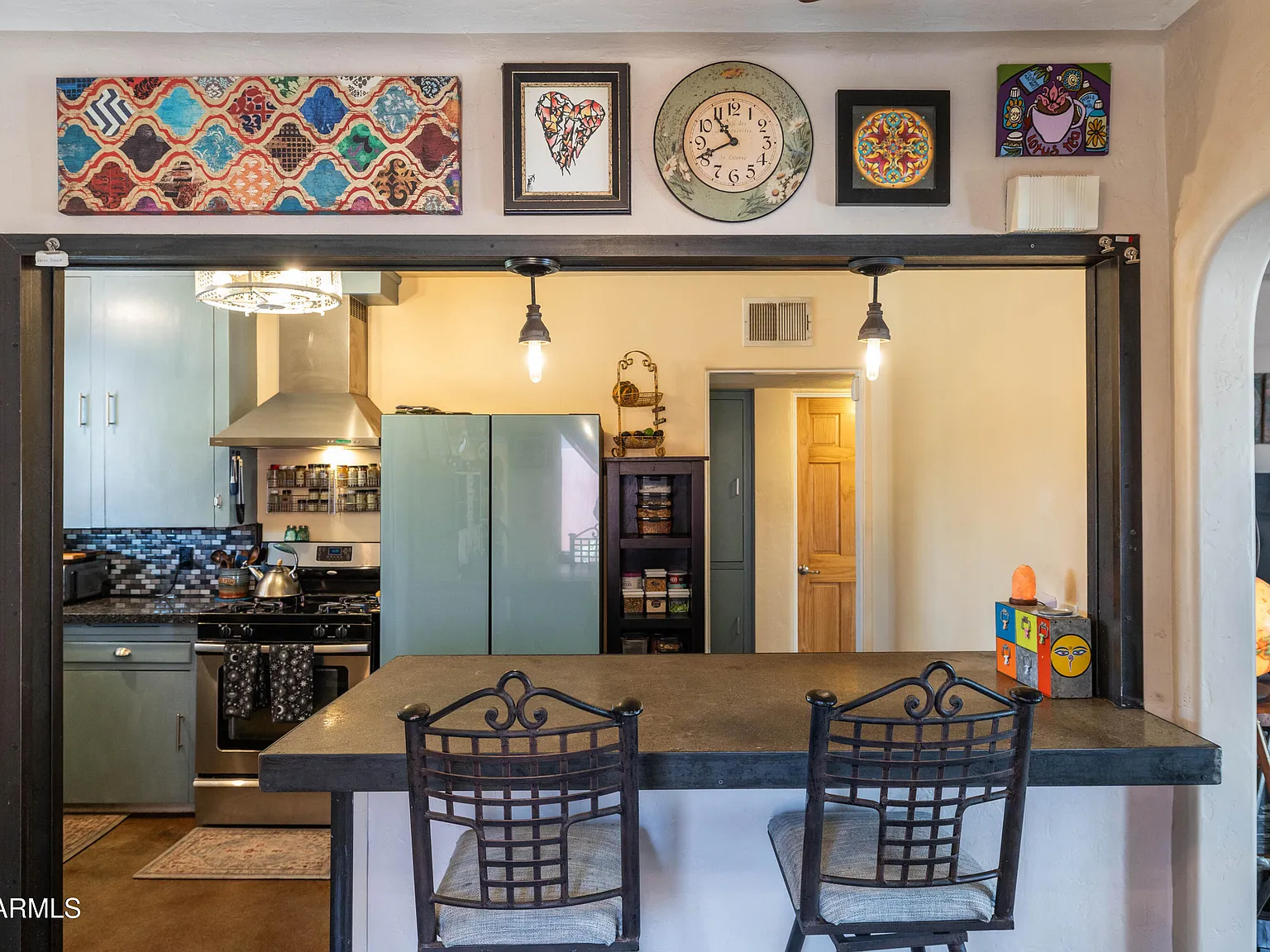
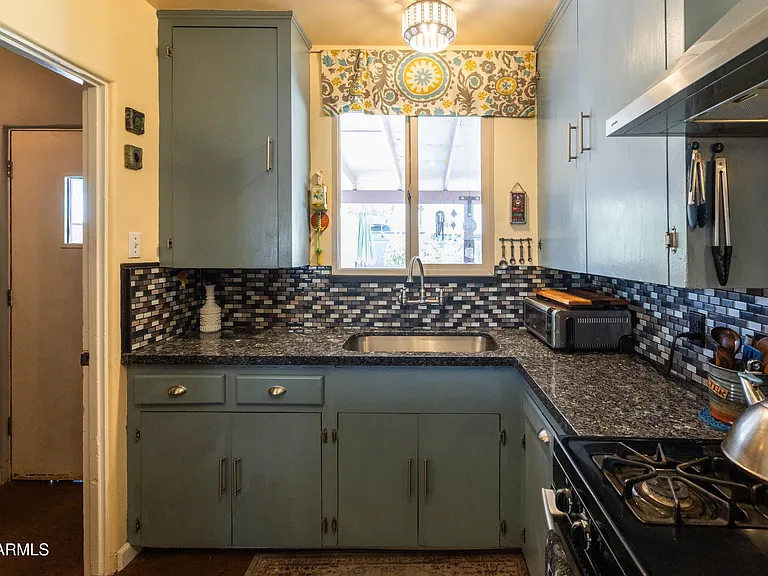
From the first day, the kitchen became the beating heart — not for granite or stainless steel, but because it became a gathering place. The bar held potluck dinners, holiday meals, celebrations. The back porch welcomed dinner parties, game nights, birthdays. More than meals, it held the kind of connection that only happens when people linger around tables, sharing food and time.
The Blank Canvas Becomes a Garden
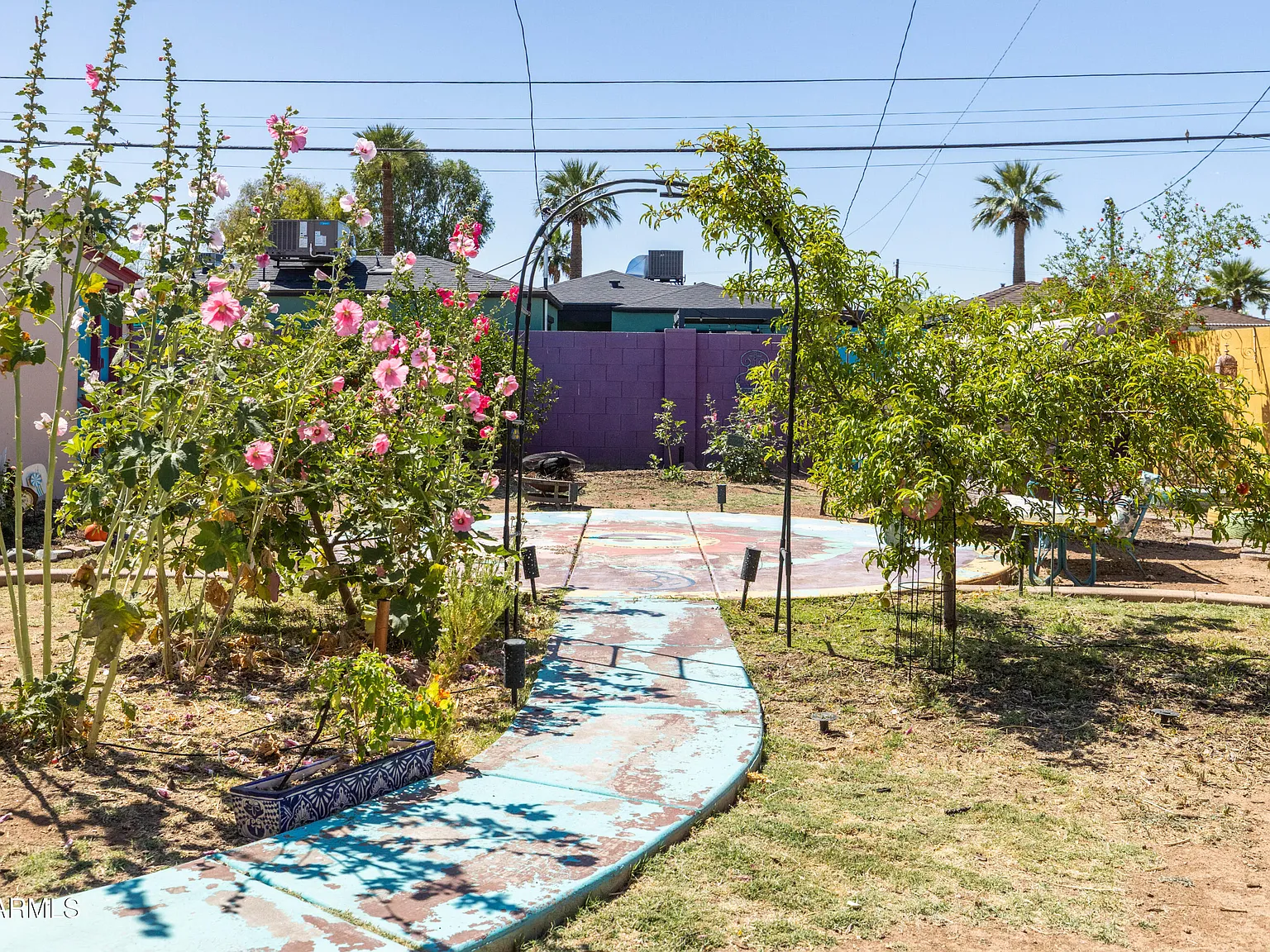
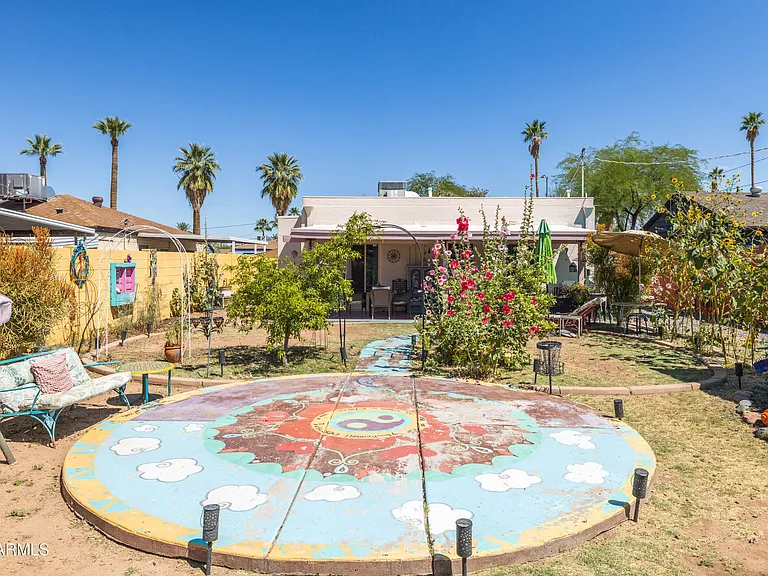
The backyard started empty. But Kristy and Joe understood something fundamental: blank canvases are invitations. Fruit trees were planted and christened with punny rock-and-roll names. A garden grew. Porch concerts filled the space with live music for the neighborhood. Movie nights under the stars became tradition.
The backyard stopped being a yard and became a stage — for life, for art, for community.
The Studio Where Art Lives
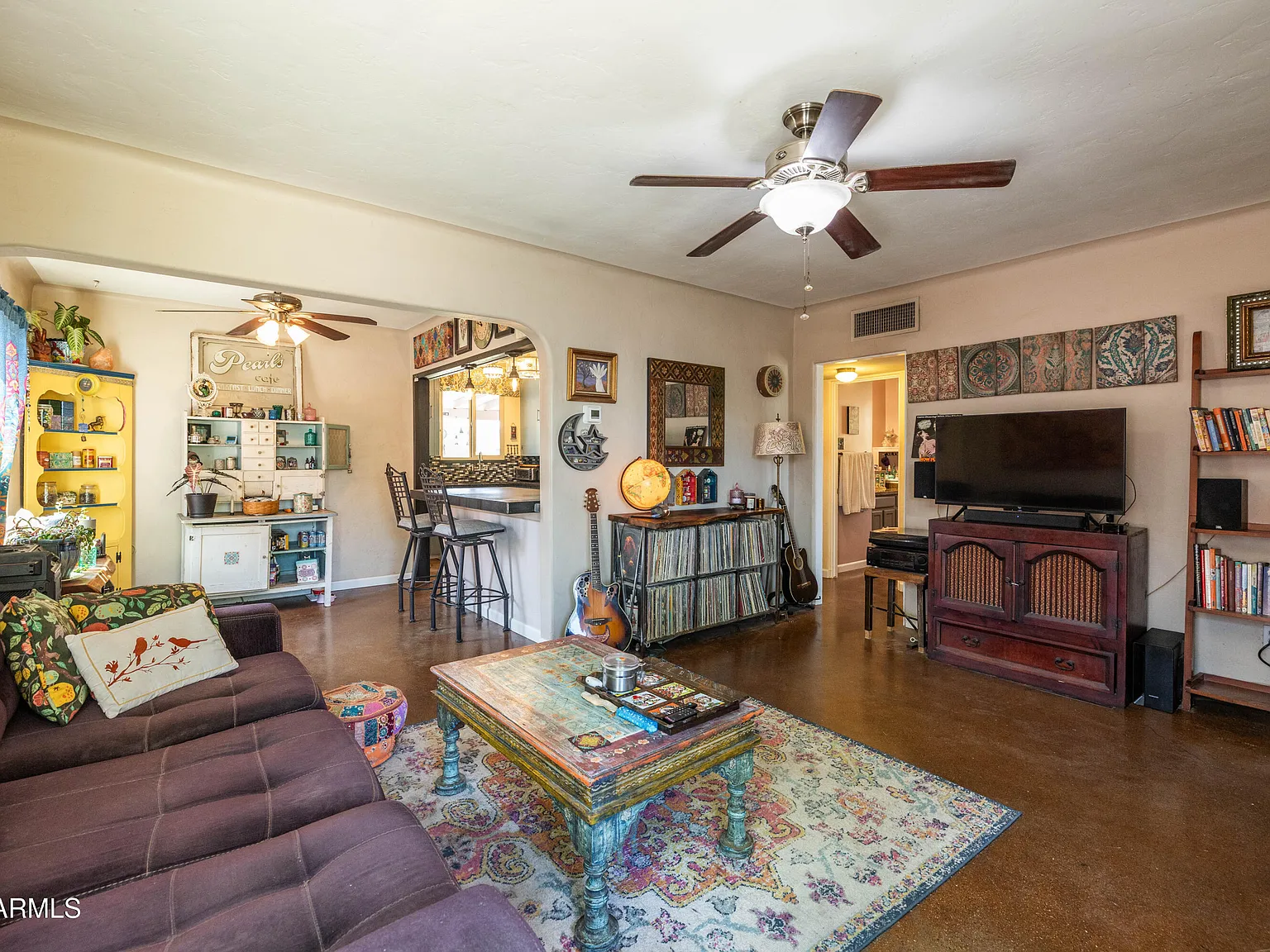
Walk into this home and you walk into a creative sanctuary — not by accident, but by intention. Over seventeen years, these walls have witnessed songs being written, bands forming, ideas debated and refined, paintings finished, friendships deepened through the kind of proximity that only comes from creating together, over years.
For thirteen years, the neighbors have heard a band practicing here. Not as an intrusion — as a gift. A soundtrack to community life.
So much creation has happened here. Songs written, bands formed, ideas discussed, images painted, friendships deepened and sustained.
Three Magical Blocks
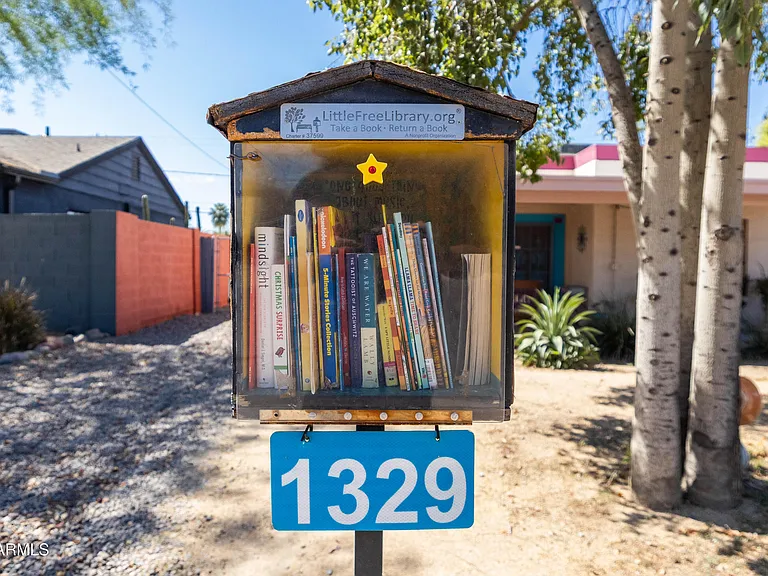
Hubbell is not just a street address. It's a pocket of peace in the heart of the neighborhood — three blocks that don't get external traffic, where neighbors are kind and caring and fun, where people watch out for each other. For thirteen years, those neighbors have enjoyed hearing the band practice.
A Front-Row Seat to Magic
Step into the backyard on the Fourth of July and you'll understand why this place is different. Fireworks visible from three locations at once. The Diamondbacks' fireworks bursting over the trees. Holiday concerts from Hance Park drifting through the air like a gift — a front-row seat to the city's celebrations without ever leaving home.
We can see the D-backs fireworks from the backyard and out the kitchen window — and hear the concerts at Hance Park, right in the backyard.
The Rhythm of Daily Life
Ollie Vaughns became their spot — years of dinners and conversations and being part of something. But the neighborhood offered endless options: restaurants, coffee shops, cool places around every corner. A golf cart became their chariot, a fun way to explore and be seen. Coronado Park sits steps away. The light rail is close. Downtown is closer. This is a neighborhood built for walking, for gathering, for bumping into neighbors and becoming friends.
What Gets Passed Forward
Kristy and Joe's parting gift to the next owners is simple but profound. Because this is not just a house with concrete floors and a backyard. It's a blank canvas waiting for your songs, your celebrations, your art. It's a kitchen built for gathering. It's a street where neighbors become family — a home where creativity doesn't just happen. It thrives.
You will love it here.
Sources & further reading
- Coronado Historic District History — City of Phoenix Historic Preservation Office
- Orville A. Bell, Phoenix Architect — Arizona State Library Archives
- Federal Housing Administration History & Design Standards — U.S. Department of Housing and Urban Development
- Transitional Ranch Architecture in Arizona — Historic Preservation Standards
- Ranch-Style Architecture & American Suburban Development — Architectural Historians Association
- Central Phoenix Historic Subdivisions, 1912–1950 — National Register of Historic Places